

Disclosure: We may earn a commission from qualifying purchases made through affiliate links, at no extra cost to you. As an Amazon Associate I earn from qualifying purchases.
Grounding has moved well beyond bare feet on grass. Now, the same idea is being brought into the bedroom with grounding sheets – conductive bedding designed to connect the body to the earth while you sleep.
It’s an intriguing concept, especially for anyone looking for a gentler addition to their nighttime routine. But before putting one on your bed, it helps to understand what grounding sheets actually do, how the connection works, and what separates a well-made option from one that may not live up to expectations.
What Are Grounding Sheets?
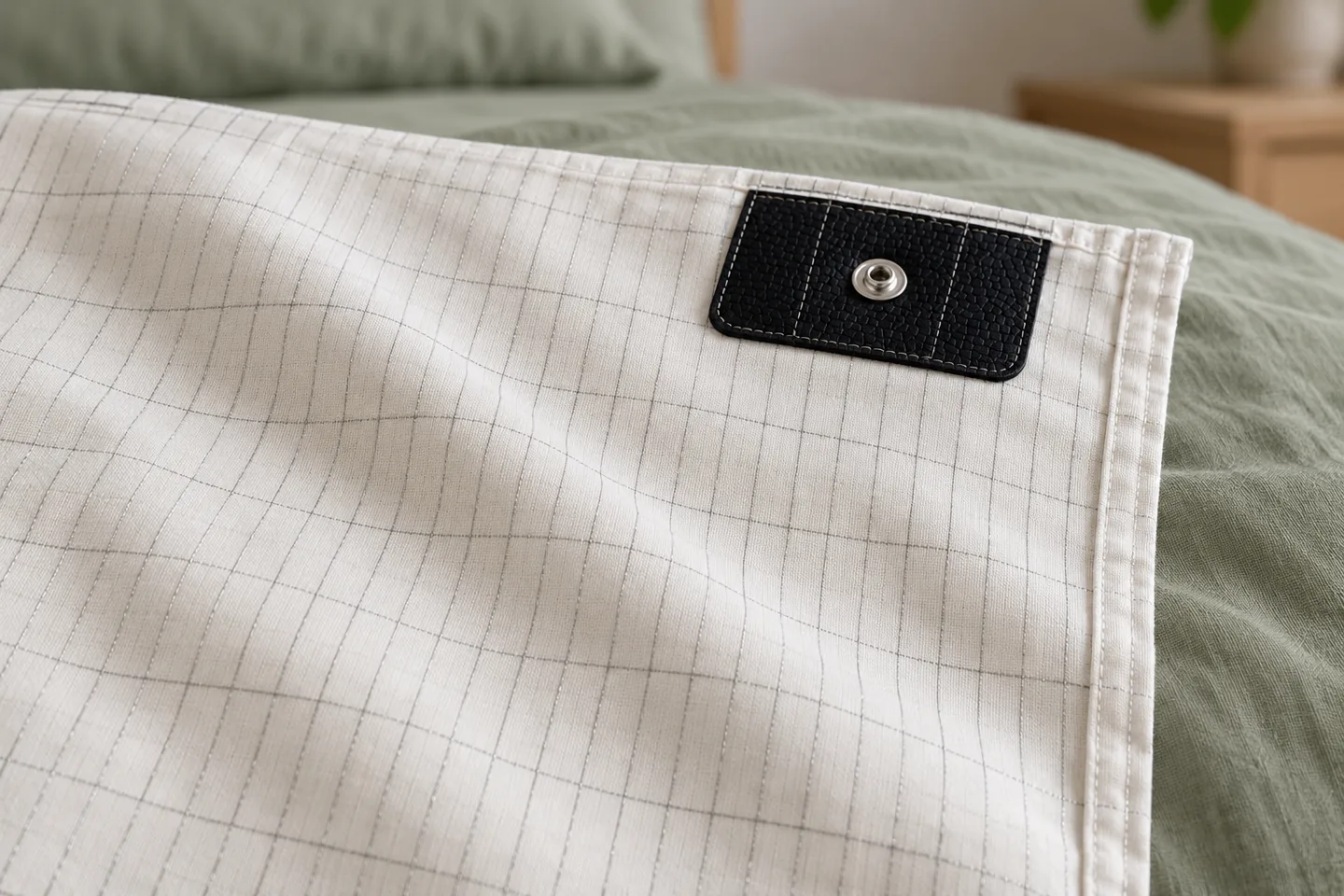
A grounding sheet is bedding with conductive fibers woven into the fabric. A connection point on the sheet attaches to a cord, which connects to the ground contact of a properly grounded outlet or to a separate ground rod, depending on the product. It is designed to let your body make electrical contact with ground while you rest. It does not heat, massage, or actively send power through the bed.
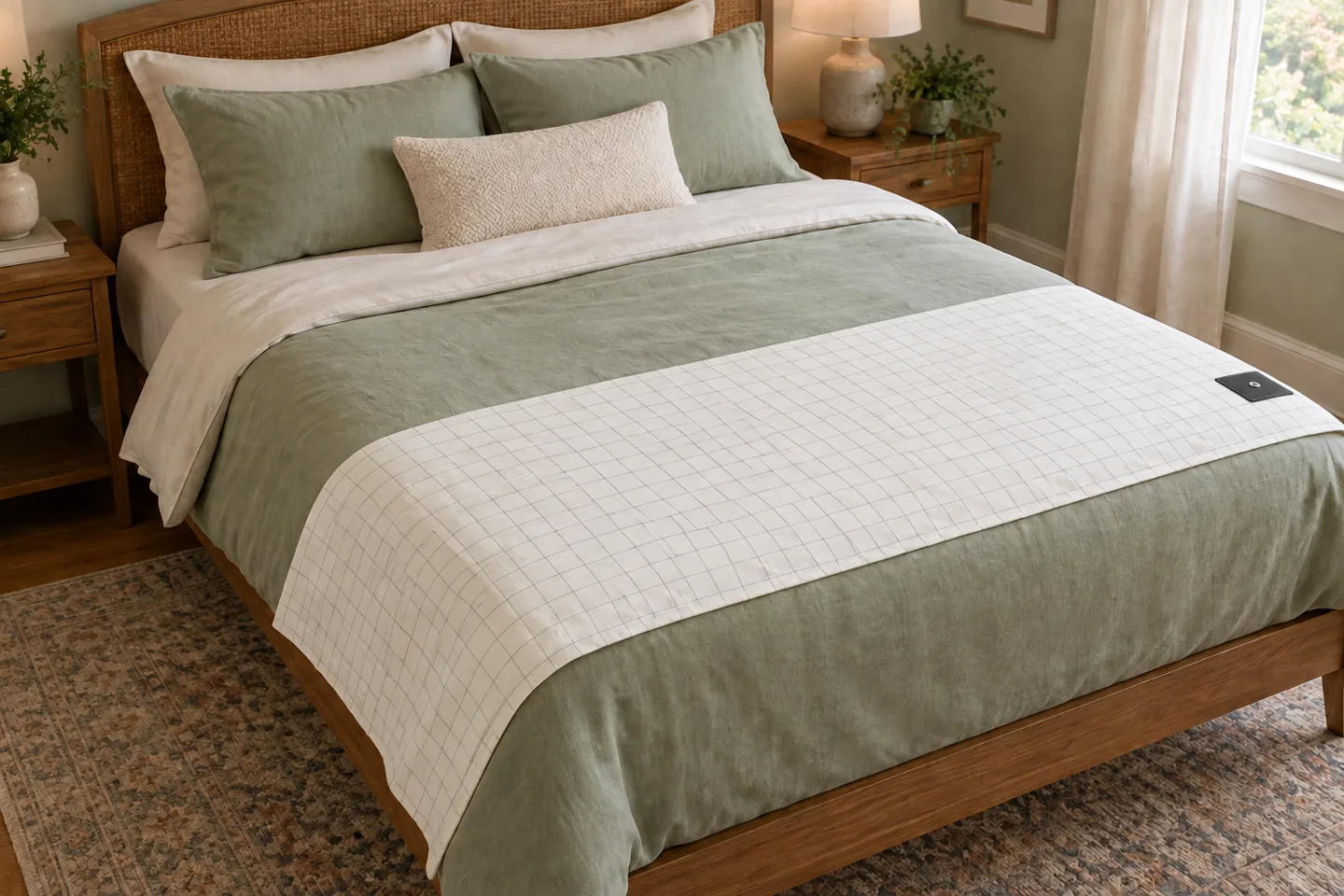
Some models replace a fitted sheet; others are half sheets that lie across the part of the mattress where your legs or torso rest. The best choice depends less on the name on the box than on whether the conductive area stays in contact with you, the cord reaches safely, and the fabric works with your laundry routine.
How Do Grounding Sheets Work?
Conductive threads carry the connection across the sheet to its connector, while a cord links the sheet to ground. With a U.S. outlet kit, the adapter connects to the outlet’s ground contact rather than the powered slots. But the outlet still needs to be properly grounded, since a three-slot face doesn’t confirm the wiring behind it.
The right tester can confirm that the sheet is connected to ground, offering reassurance that its electrical connection is working as intended. That’s a helpful starting point for trying the sheet and noticing how sleep feels over time. Any changes are personal observations rather than proof of a health benefit, while the tester remains the way to verify the grounding connection.
What Are Grounding Sheets Made Of?
Many fabric grounding sheets combine cotton with silver fibers. Some products use other conductive materials, including stainless steel or carbon, so check the actual fiber content and the size of the conductive area before choosing one. A silver grid woven through cotton is different from silver blended throughout the surface. The label should tell you what is conductive, where it is, and how to care for it.
Pay attention to the part you’ll be in contact with. A half sheet may fit across a king bed but cover only the lower half of your body. A fitted version gives more bed coverage but must fit the mattress depth as well as the standard Twin, Full, Queen, or King dimensions. If you’re sensitive to certain metals, check the fiber label first. Not every grounding sheet uses silver.
How Do You Set Up A Grounding Sheet Safely?
- Check the outlet. Use the outlet checker specified for your kit. If it indicates a fault or no ground, do not connect the sheet there. Try another outlet or ask a qualified electrician about the wiring.
- Fit the sheet where contact is likely. Place a half sheet under the part of your body that usually rests in one spot. Keep the connector at an edge that will not press against you.
- Attach the supplied cord and adapter. Follow that product’s directions. Route the cord so it cannot be pinched by the bed frame or snagged when you get up.
- Check the product connection if a tester is supplied. An outlet checker verifies the receptacle, not the sheet’s entire conductive surface. A product tester is a different accessory.
Do not alter a plug or improvise a connection to an ungrounded outlet. The Electrical Safety Foundation International explains why the ground contact is a safety feature of a properly wired receptacle.
Do You Need Direct Skin Contact With A Grounding Sheet?
Direct skin contact is the clearest way to make contact with the conductive fabric. If you want a regular sheet or pajamas between you and the grounding layer, check that maker’s instructions. Some makers say thin natural fibers can allow a connection as moisture reaches the fabric, while thicker or synthetic layers can interfere. A comforter or foam mattress topper between you and the grounding sheet is a poor setup for contact.
With a half sheet, placement matters just as much as the fabric. If the conductive section sits too high while your feet stay buried under a thick blanket, the extra width won’t help much. Think about where your bare legs, arms, or torso usually rest during the night and position the sheet so there’s consistent skin contact.
Do Grounding Sheets Improve Sleep?
Early research suggests grounding during sleep may have an effect, but it doesn’t show that every grounding sheet will improve sleep. A 2025 randomized study followed 60 people for 31 days and found longer total sleep time among those using grounding mats. The study tested mats, though, so its findings can’t automatically be applied to every grounding sheet on the market.
A much earlier 12-person pilot study used a conductive mattress pad and reported changes in cortisol alongside better self-reported sleep. But with such a small sample and an older study design, it can’t tell us much about how today’s grounding sheets might perform.
That leaves an honest middle ground. You can verify the setup and see whether you like sleeping on the fabric, but you should not treat a grounding sheet as a proven fix for insomnia or persistent pain. If poor sleep is ongoing, a sheet is no substitute for getting the cause assessed.
How Do You Wash A Grounding Sheet?
Disconnect the cord and follow the care label for that exact fabric. Silver-thread sheets are often machine washable, unlike many conductive mats, but wash temperature and drying rules vary. For example, one silver-cotton sheet maker recommends washing every week or two with a liquid detergent and avoiding bleach, fabric softener, whitening agents, and dryer sheets because residue or tarnishing can affect the conductive fibers.
Check the care instructions before washing or drying your grounding sheet, since high heat can damage some conductive fabrics. The same goes for body oils, lotions, and laundry products, which may affect conductivity depending on the material.
Care matters here because special washing instructions can add hassle and cost. If a sheet needs different detergent, lower heat, or extra care to protect its conductivity, factor that in before you buy it.
Grounding Sheet Vs. Grounding Mat: Which Fits Your Bed?
A fabric grounding sheet is closer to regular bedding and can usually go through the wash as directed on the care label. A grounding mat is easier to wipe down, but it may cover much less of the mattress. If you move around in your sleep, pay attention to how much of your body will stay in contact with the conductive surface through the night.
The Earthing Universal Mat Kit review shows what a compact 12.5-by-29-inch mat looks like for bed or desk use. For a broader view of formats, see our earthing products guide.
What Should You Check Before Buying A Grounding Sheet?
- Coverage and fit: Compare the conductive area in inches with your mattress size and sleep position. Check mattress depth for a fitted sheet.
- Fabric and sensitivities: Read the fiber content and find out whether the conductive thread runs throughout the fabric or only in a grid.
- Included setup pieces: Check whether the cord, safety adapter, outlet checker, and product tester are included or sold separately.
- Cord placement: Measure the distance to a suitable outlet and plan a path away from feet, pets, and moving bed parts.
- Care and replacement: Read the wash instructions, warranty, and return terms before ordering. Conductive fabric can wear with use and improper laundering.
If the outlet beside your bed isn’t grounded, deal with that before buying a sheet. A cheap option won’t save you money if the setup can’t work in your bedroom.
For a first purchase, I’d pay more attention to what the sheet is made from, what comes in the box, and whether you can return it if it isn’t right for you. Those details tell you more than a page full of promises.
Conclusion
Grounding sheets can be a simple way to try grounding while you sleep, but how the sheet connects matters. The outlet needs to be properly grounded, and your skin needs to make enough contact with the conductive fabric for the sheet to work as designed.
Before buying a grounding sheet, check how it connects to ground and whether the conductive area suits the way you sleep. Read the care instructions closely too, since washing and drying can affect conductive fibers over time.
Research on grounding sheets and sleep is still developing, but that does not mean they are not worth considering. If grounding fits the way you want to approach sleep, choose a sheet that is easy to verify, comfortable to use, and made by a brand that is clear about how it works. That gives you a better chance of getting what you paid for.
Grounding Sheets FAQ
Can A Grounding Sheet Work Through A Regular Fitted Sheet?
Sometimes, depending on the fabric and the maker’s instructions. A thin natural-fiber layer may allow contact as moisture reaches it, but thick or synthetic layers can interfere. Direct contact with the conductive sheet is the simpler setup to verify.
Does A Grounding Sheet Use Electricity?
It is designed to connect to ground, not to draw power from the outlet’s live slots. Use only the supplied connection method and a properly grounded outlet. Check the exact product instructions before setup.
What If My Bedroom Outlet Is Not Grounded?
Do not use that outlet for the sheet. Test another outlet and ask a qualified electrician if you are unsure about the wiring. Some brands offer a separate ground-rod tool, which requires its own instructions and suitable installation.
Can You Sleep On A Grounding Sheet Every Night?
These sheets are sold for regular overnight use when installed and maintained according to their instructions. Check the cord, fabric, and connection periodically, and stop using damaged parts. Regular use does not guarantee a sleep benefit.
Is A Half Sheet Enough?
It can be if the conductive section stays in contact with you. Half sheets take less fabric and can span the lower part of a bed, but a full fitted sheet provides a larger potential contact area for anyone who changes position often.
Start with the outlet and the actual contact area, then compare fabric care and what is included in the kit. Those are the details you can verify before deciding whether a grounding sheet belongs in your bedroom.
Pingback: GroundingWell Vs Earthing Sleep Mat: Bed Or Desk?